KRIS LEWIS, PhD

Research

How do marine food webs respond to global change and human pressure, and how does that knowledge reach the people deciding what to do? My lab answers with ecosystem models, long-term monitoring and field experiments, all framed by Transdisciplinary Oceanography.

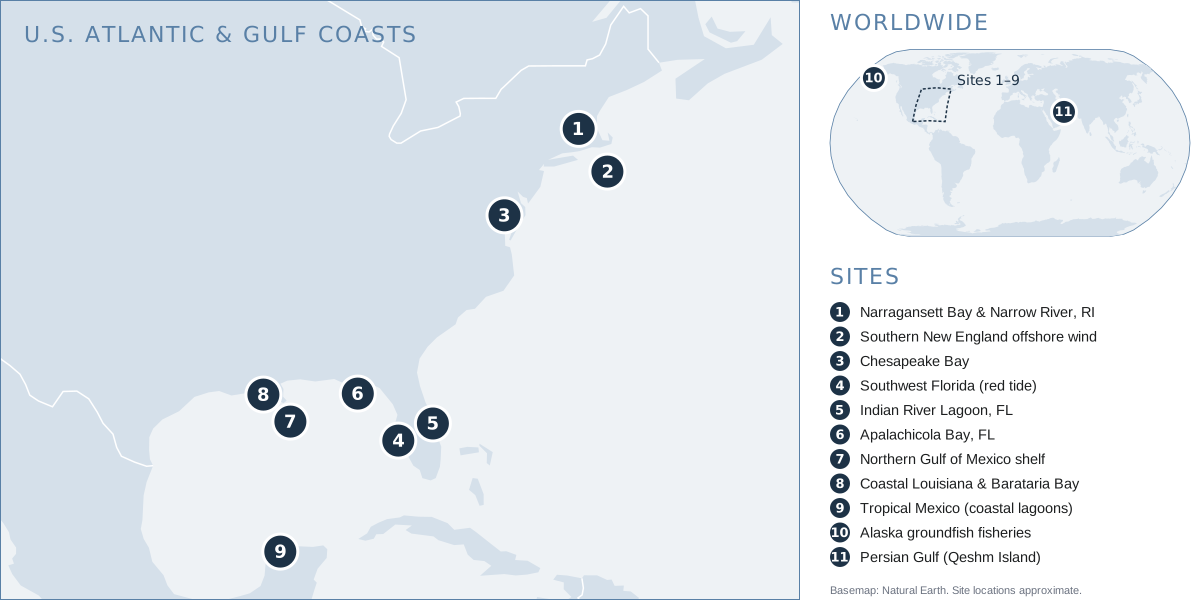
Where the Lewis Lab works

Project and publication sites
Map of Lewis Lab research sites: Narragansett Bay, southern New England offshore wind, Chesapeake Bay, Southwest Florida, Indian River Lagoon, Apalachicola Bay, the northern Gulf of Mexico shelf, coastal Louisiana, tropical Mexico, Alaska and the Persian Gulf

Emerging research

What I’m building now
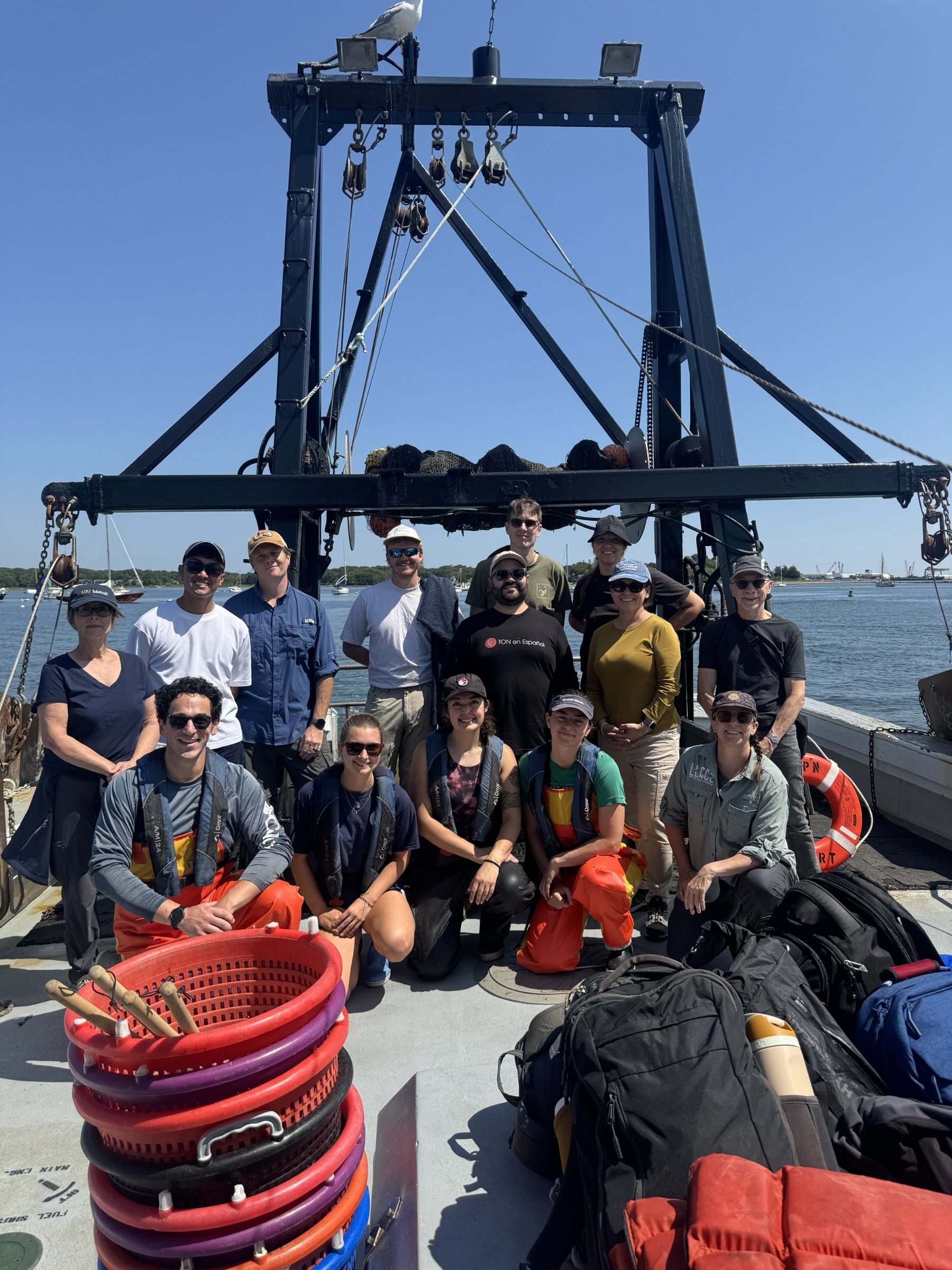
Large student group poses on a trawler deck beneath the gantry
Emerging · 01

Transdisciplinary Oceanography

Science built with coastal communities, not just for them.

I coined Transdisciplinary Oceanography for an applied approach that draws on every branch of oceanography (chemical, geological, biological and physical) and brings non-academic partners into the science itself. Local, traditional and Indigenous knowledge and lived experience count as expertise, and community members help define the question.

The flagship is the Northeast Community Climate Resilience Incubator, a hub helping East Coast communities turn their own resilience ideas into funded action on flooding, shoreline change, development pressure and shifting fisheries.
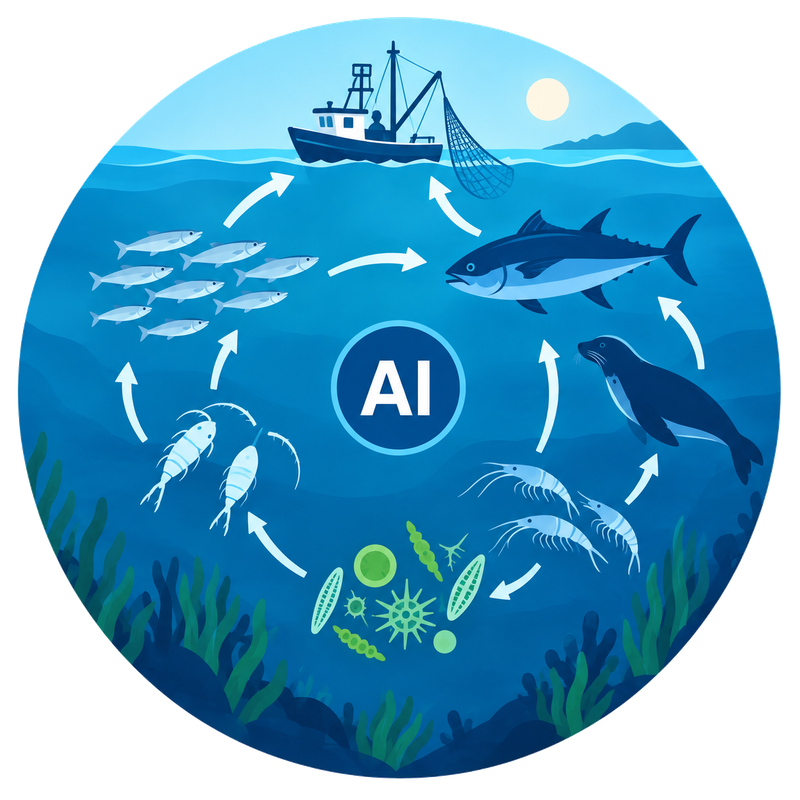
Illustration of a marine food web cycle around a central AI symbol
Emerging · 02

AI-assisted food web modeling

Building and testing food web models fast enough to keep pace with decisions.

Building a food web model by hand, from gathering data to parameterizing, calibrating and running scenarios, can take months or years. That bottleneck keeps ecosystem-based advice out of reach for many places, especially data-poor regions where the time and data to build a model simply aren’t there.

We’re using agentic AI across the whole modeling lifecycle to break that bottleneck: assembling and synthesizing data, drafting and checking model structure and parameters, calibrating, and running the scenarios managers ask for. The goal is faster, more accessible ecosystem models, including for low-data systems, with every AI-generated step documented and checkable.

Core research themes

Established programs
Ecosystem model figure
Core · 01

Ecosystem modeling

Food web models for climate change, habitat loss and human stressors, not just fisheries.

The lab builds Ecopath with Ecosim and Ecospace models that serve both theory (how food webs respond to disturbance) and managers who need usable answers, including the Louisiana Coastal Master Plan and environmental impact studies.

At GSO the work is moving into the North Atlantic, where offshore wind, fisheries and climate pressure meet, with NOAA’s Northeast Fisheries Science Center. New validation tools and zooarchaeological data extend models across centuries.

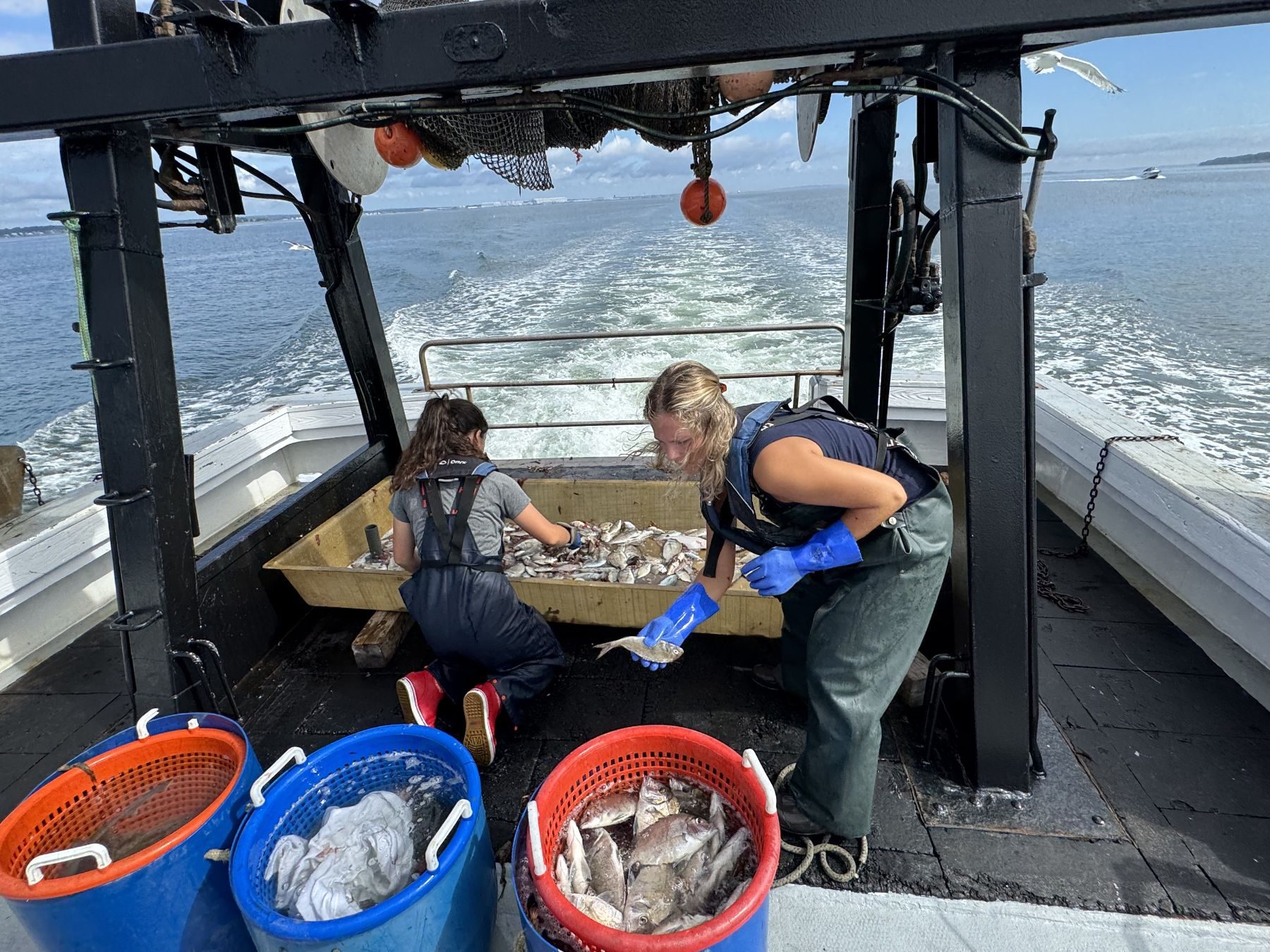
Two scientists sort trawl catch at a culling table
Core · 02

Fisheries ecology & long-term data

Long-term records that show how coastal fish communities are changing.

As Director of the GSO Weekly Fish Trawl, I look after a ~60-year time series and use it to train new researchers, from undergraduate interns tracking the rapid rise of Spot in New England waters to OCG 670 students feeding monitoring data into ecosystem models.

Long records also underpin work on nekton after the Deepwater Horizon spill, predator–prey change after seagrass loss in the Indian River Lagoon, and recreational fishing around offshore wind.

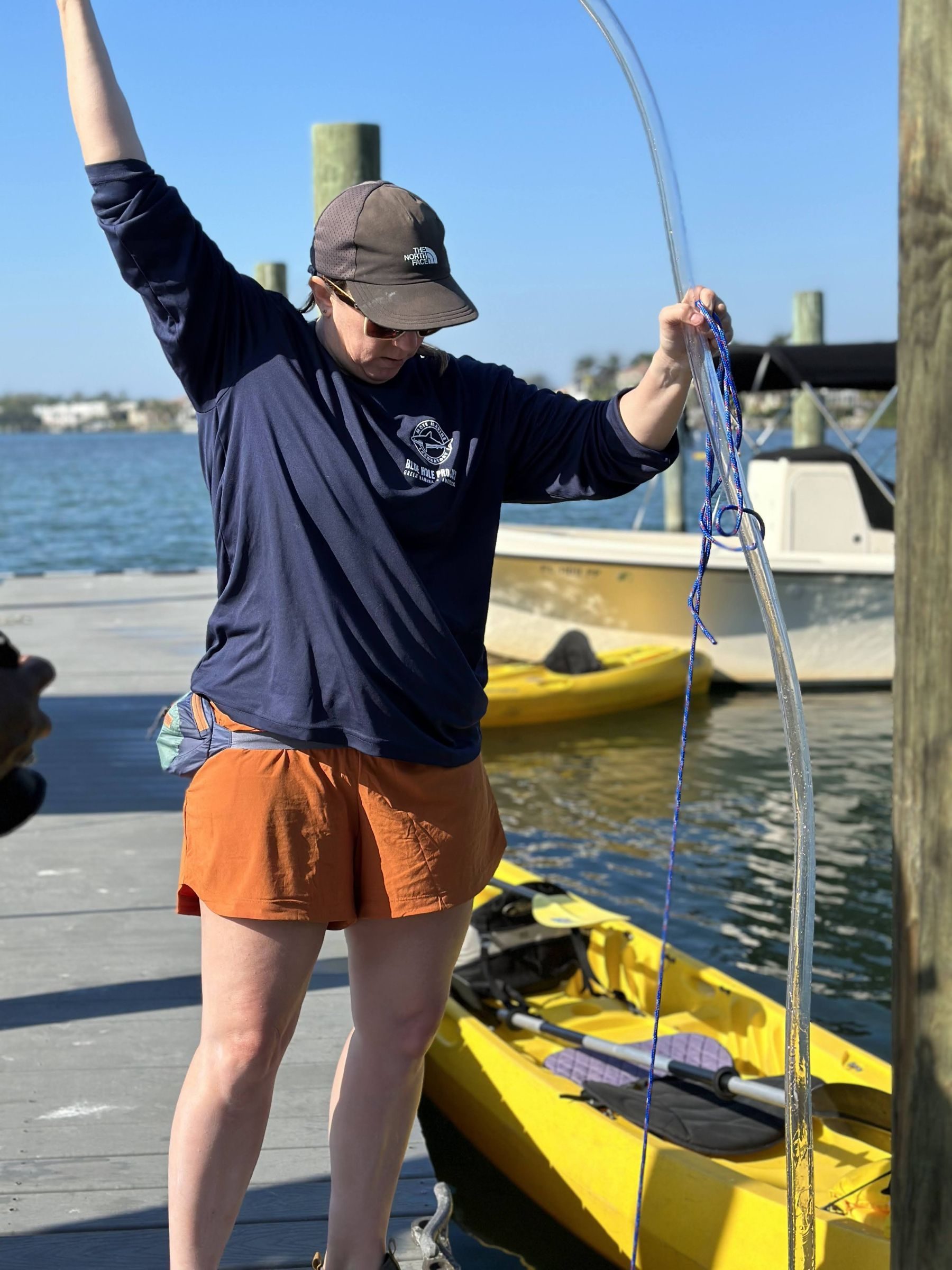
Researcher on a dock lifts sampling tubing beside a yellow kayak
Core · 03

Coastal resilience & water quality

Testing whether harmful algal bloom treatments are safe for everything else in the water.

Mesocosm experiments on bacteria, bivalves, sea urchins and crabs showed that modified clay treatment for Florida red tide (Karenia brevis) did not increase mortality or change behavior compared with untreated blooms. It was the first ecological risk assessment of modified clay in Gulf of Mexico ecosystems.

In Rhode Island, student-led work examines long-term water quality in the Narrow River, and the resilience incubator connects this science to communities facing flooding and coastal change.